Carrito
0
A ring can look perfect on your screen and still disappoint the moment it reaches your hand if the fit is off. That is why knowing your ring size at home matters before you shop for an everyday style, a meaningful gift, or a piece saved for a special occasion.
The good news is that you do not need a jewelry counter to get surprisingly close. With a few common items and a little patience, you can measure at home in a way that feels easy and practical. The key is not rushing. Ring sizing is simple, but small mistakes can change the fit more than most shoppers expect.
The easiest ways to check ring size at home
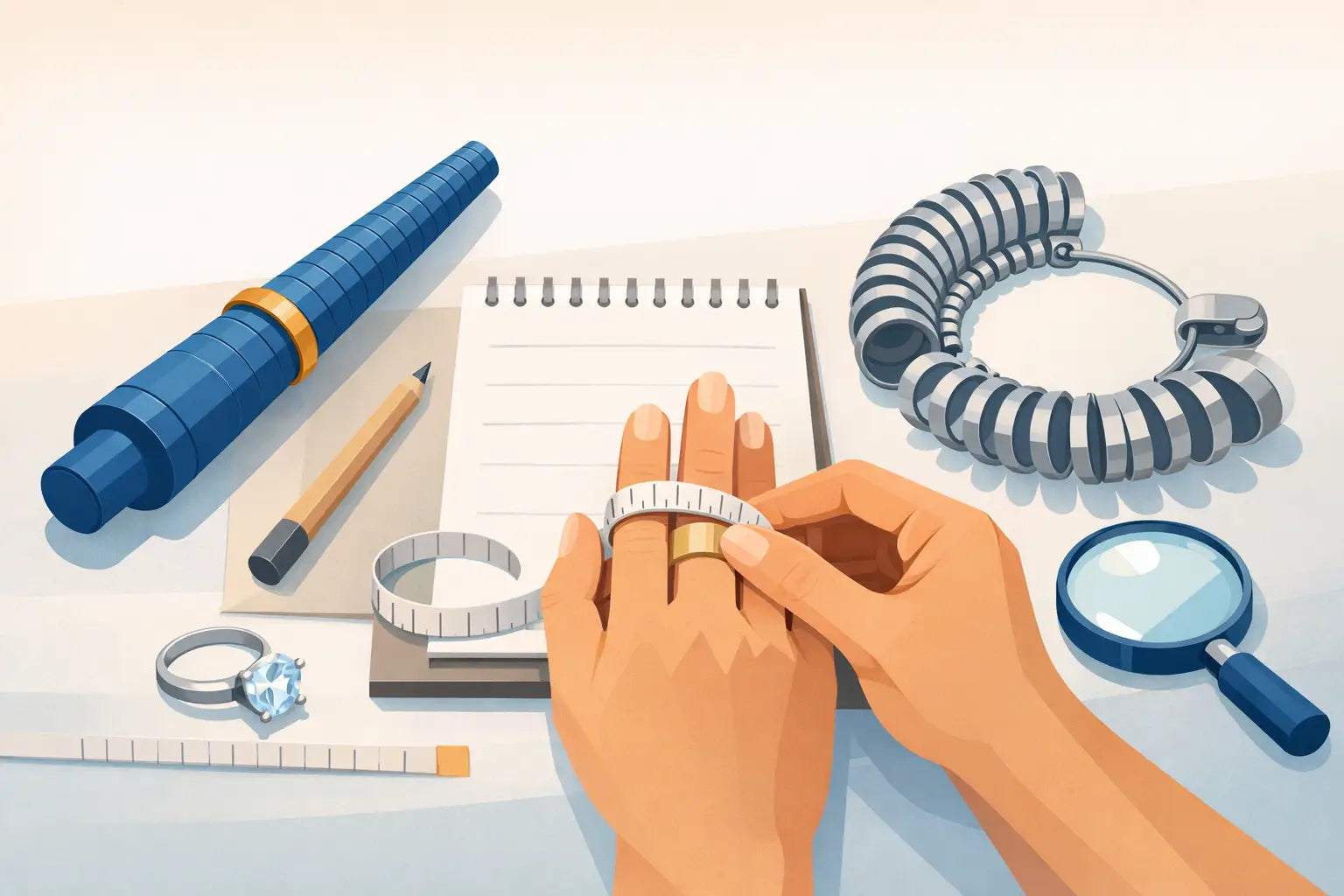
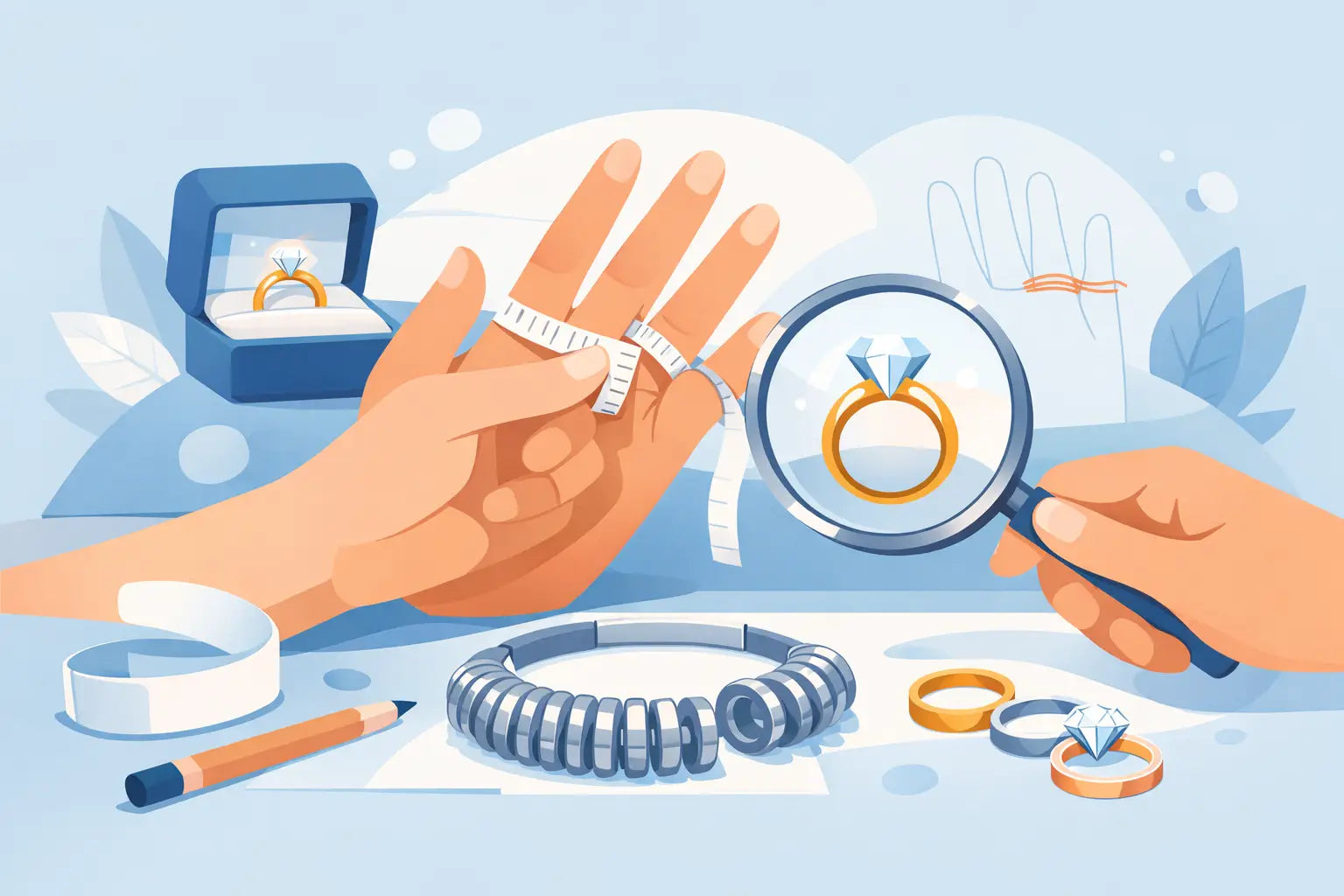
If you want to find your ring size at home, there are three methods most people use. The best one depends on whether you already own a ring that fits well, whether you are measuring for yourself or someone else, and how exact you need the result to be.
If you already have a ring that fits the correct finger, that is usually the easiest starting point. Place the ring on a ruler and measure the inside diameter in millimeters straight across the center. That measurement can then be matched to a standard US ring size chart. This method tends to work well because it uses a real ring that already feels comfortable.
If you do not have a well-fitting ring, you can wrap a thin strip of paper or a piece of string around the base of your finger. Mark the point where it overlaps, then measure that length in millimeters. That number represents the finger circumference. From there, you compare it to a US ring size chart.
A printable ring sizer can also help, especially if you want a more visual option. The catch is that your printer settings have to be accurate. If the page scales even slightly, your result can be off. For that reason, many shoppers still like to double-check with paper, string, or an existing ring.
Why ring size at home can be slightly tricky
Rings are small, but fit is affected by more than just one measurement. Your fingers can swell from heat, exercise, or even saltier meals. Cold weather can make them measure smaller than usual. Some people also have larger knuckles and slimmer fingers, which means the ring needs to slide over the knuckle without feeling loose once it settles.
That is why timing matters. The best time to measure is usually at the end of the day, when your fingers are at a more natural size. Measuring first thing in the morning or right after being outside in the cold can give you a number that is too small.
It also helps to measure the exact finger that will wear the ring. Your dominant hand is often slightly larger, and the same finger on your left and right hand may not match. A ring for your ring finger cannot automatically be sized based on your middle finger or index finger.
How to measure with string or paper
This is the method many shoppers try first because it uses items already at home. It can work well, but the details matter.
Use a narrow strip of paper rather than thick cardstock, or use a non-stretchy string. Wrap it around the base of your finger so it feels snug but not tight. You want it to mimic the feel of a ring that stays in place comfortably. If you pull too tightly, your final size may end up too small.
Mark where the end meets the rest of the strip, then lay it flat and measure the length in millimeters. If your measurement falls between sizes, it is often safer to size up slightly, especially for wider bands. Wider rings tend to feel tighter than delicate, slim bands.
Take the measurement more than once. If you get three different answers, do not pick the smallest one just because it sounds flattering. Instead, remeasure until the numbers are consistent. A careful average is usually more reliable than a single quick attempt.
How to use a ring you already own
If you have a ring that already feels right on the finger you are shopping for, this method is often the most convenient. Set the ring on a flat surface and measure the inside diameter from one inner edge to the other. Do not include the metal thickness. Only the open inside space counts.
This approach is especially helpful when shopping for a gift. If you can borrow a ring your partner already wears on the correct finger, you can get a useful measurement without asking directly. Just make sure the ring is worn on the same hand and same finger type. A ring that fits the right middle finger may not fit the left ring finger.
There is one trade-off here. Some rings fit differently depending on band width and style. A slim fashion ring and a thicker statement ring may not feel identical even if they share the same numerical size. If the new ring has a noticeably wider band, many people prefer going up by a half size.
Fit tips that matter before you buy
A good ring fit should slide on with light resistance and come off without a struggle. It should not spin constantly or feel like it might slip off when your hands are cool. At the same time, it should not pinch or leave your finger throbbing after a few minutes.
If you are between sizes, think about the style you are choosing. For sleek, narrow bands, going with the closer fit often works well. For chunkier bands, stacked rings, or styles you plan to wear for long stretches, a little extra room can feel better.
Lifestyle matters too. If you want a ring for daily wear, comfort matters as much as appearance. If you are shopping for a special-event piece that will be worn only occasionally, you may be comfortable with a fit that is slightly more exact. Smart rings can also call for extra attention because the fit may affect comfort throughout the day and during sleep or activity.
Common mistakes people make
The biggest mistake is measuring too quickly. A rushed measurement with stretchy string or a thick marker line can shift your result enough to matter.
Another common issue is ignoring band width. People often assume a size is a size, but wider rings usually feel tighter. If you are moving from a very delicate ring to a broader design, the fit may change even when the labeled size stays the same.
Some shoppers also measure only once, in one room temperature, at one time of day. Your finger size is not fixed minute to minute. If the ring is for a meaningful purchase, it is worth checking more than once so you feel more confident when you order.
When an at-home measurement is good enough
For many online jewelry purchases, a careful at-home method is more than enough. If you are buying a fashion ring, a giftable everyday piece, or a style with a standard band, home sizing can get you very close.
It is especially useful when convenience matters. Shopping online should feel exciting, not complicated. Taking a few minutes to check your fit can make browsing feel easier and help you choose with more confidence.
For milestone purchases, surprise proposals, or rings you plan to wear every single day, some shoppers still prefer an in-person sizing check when possible. That extra step can offer peace of mind. Still, if that is not realistic, measuring carefully at home is a strong alternative.
A simple way to feel more confident shopping rings
Jewelry is personal. A ring can mark a promise, elevate your everyday style, or become the piece you reach for without thinking. Getting the size right helps the experience feel as beautiful as the piece itself.
If you are planning to shop online, take a little extra time with your measurement, compare it carefully, and think about the style you want to wear. That small step can make the difference between a ring that stays in the box and one that feels made for the moment. For shoppers browsing collections at BJB Jewelry Shop, a confident fit turns choosing the right ring into something simple, elegant, and much more rewarding.